Ryan Bickler Discusses Wildfire Coverage, Insurance Accountability, and Oregon Consumer Protection
When disaster strikes, insurance is supposed to provide more than money. It is supposed to provide security, stability, and peace of mind.
But what happens when an insurance company fails to keep that promise?
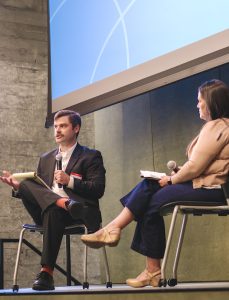
Spooner Staggs partner Ryan Bickler addressed that question during an Oregon Consumer Justice fireside chat at “Insurance Coverage and Wildfires: A Changing Risk Landscape.” The August 12 program brought together consumer advocates, researchers, policymakers, and lawyers to examine how wildfire risk is affecting insurance access in Oregon – and what stronger consumer protections may be needed.
Ryan discussed the real-world consequences of denied and undervalued insurance claims, Oregon’s evolving insurance law, and the remaining gaps that can make it difficult to hold insurers accountable.
From Defending Insurance Companies to Representing Policyholders
For 50 years, Spooner Staggs lawyers represented insurance companies. That history gives the firm’s lawyers an unusually deep understanding of how insurers evaluate, defend, and resolve claims.
The firm once believed strongly in that system. Insurance, at its best, is a promise built on trust: Policyholders pay premiums year after year in exchange for protection when something goes wrong.
Over time, however, the firm’s lawyers saw human judgment and experienced claims professionals increasingly give way to algorithms, rigid data models, and cost-cutting practices. Relationships mattered less; efficiency mattered more. Too often, fairness appeared to become optional.
Policyholders and insurance company employees felt the consequences. So did the public.
In 2024, Spooner Staggs made a defining decision: It would stop defending insurance companies and begin using its experience to represent seriously injured people and policyholders.
“We want to show people how insurance should work – and what can be done when it fails to live up to the promises people relied upon when buying their coverage,” Ryan explained.
When a Denied Claim Becomes a Human Crisis
Ryan discussed several types of insurance disputes that Spooner Staggs now handles for Oregon consumers.
Denied Medical Benefits
Personal injury protection (PIP) coverage is intended to help people obtain medical treatment after a car crash. When an insurer improperly denies or delays those benefits, the consequences can extend far beyond an unpaid bill.
A relatively small, disputed expense may prevent someone from receiving diagnostic imaging, confirming the need for surgery, or continuing necessary treatment. The immediate financial dispute may be modest. The resulting harm may not be.
Underinsured Motorist Claims
Underinsured motorist coverage is designed to protect people when an at-fault driver does not carry enough insurance to compensate them fully.
But policyholders sometimes receive offers that bear little relationship to the actual harm they suffered. When an insurer relies on questionable assumptions or manipulated inputs to undervalue a claim, the policyholder may be forced into litigation or arbitration simply to pursue the benefits for which premiums were paid.
Ryan emphasized that effective representation begins with understanding what happened to the individual – not merely accepting the insurer’s valuation.
How Moody Changed Oregon Insurance Law
Ryan also discussed the Oregon Supreme Court’s 2023 decision in Moody v. Oregon Community Credit Union, an important development in the rights available to Oregon policyholders.
Historically, when an Oregon insurer wrongfully withheld benefits, the policyholder’s recovery was generally limited to the benefits owed under the policy, along with attorney fees when the applicable statutory requirements were satisfied.
That remedy did not always address the full human impact of an improper denial.
In Moody, the Oregon Supreme Court allowed a policyholder to pursue a “negligence per se” claim based on alleged violations of Oregon’s unfair claim-settlement-practices statute. The Court also concluded that emotional-distress damages could potentially be recovered under the circumstances alleged in that case.
The decision recognized an important reality: Paying policy benefits after a wrongful denial does not necessarily repair all the harm the denial caused.
Consider a family forced to live in a vehicle, stay on friends’ couches, or endure months of instability because an insurer improperly refuses to provide additional living-expense benefits after a covered loss. Paying those overdue benefits later may address the contractual debt. It does not erase the fear, humiliation, stress, and disruption the family endured.
“People do not buy insurance only for reimbursement,” Ryan said. “They buy peace of mind. When an insurer wrongfully takes that away at the moment it is needed most, simply paying the original benefit may not make the policyholder whole.”
Important Protections – but Significant Gaps Remain
Although Moody was an important development, Ryan cautioned that Oregon law continues to evolve. Because the decision arose through the common law rather than a comprehensive first-party insurance bad-faith statute, its application can vary as courts address different facts, claims, and legal arguments.
Ryan believes Oregon consumers would benefit from clearer and more consistent legislative protections.
Spooner Staggs has supported efforts associated with Oregon Consumer Justice to make the insurance industry subject to appropriate provisions of Oregon’s Unlawful Trade Practices Act. Such legislation could provide policyholders with an additional tool when insurers engage in deceptive or unfair conduct.
Ryan also supports codifying a first-party insurance bad-faith claim in Oregon. A carefully drafted statute could clarify insurers’ obligations, reduce uncertainty, and establish more consistent remedies when companies fail to handle their own policyholders’ claims fairly.
Insurance companies may argue that stronger accountability will increase premiums. But premiums are already rising while many consumers face more restricted coverage, non-renewals, and increasingly difficult claim processes. Consumers should not be asked to pay more while receiving less protection and fewer meaningful remedies.
Keeping the Insurance Promise
Wildfires are reshaping Oregon’s insurance market. They are affecting affordability, availability, property values, community resilience, and families’ ability to recover after catastrophe.
But the central principle remains simple.
Insurance is a promise. Policyholders uphold their part by paying their premiums. Insurance companies should be required to uphold theirs – fairly, promptly, and in good faith.
Spooner Staggs is proud to work with Oregon Consumer Justice and other advocates seeking stronger protections for Oregon consumers. We are equally proud to stand beside individual policyholders when the promise they purchased proves difficult to enforce.